

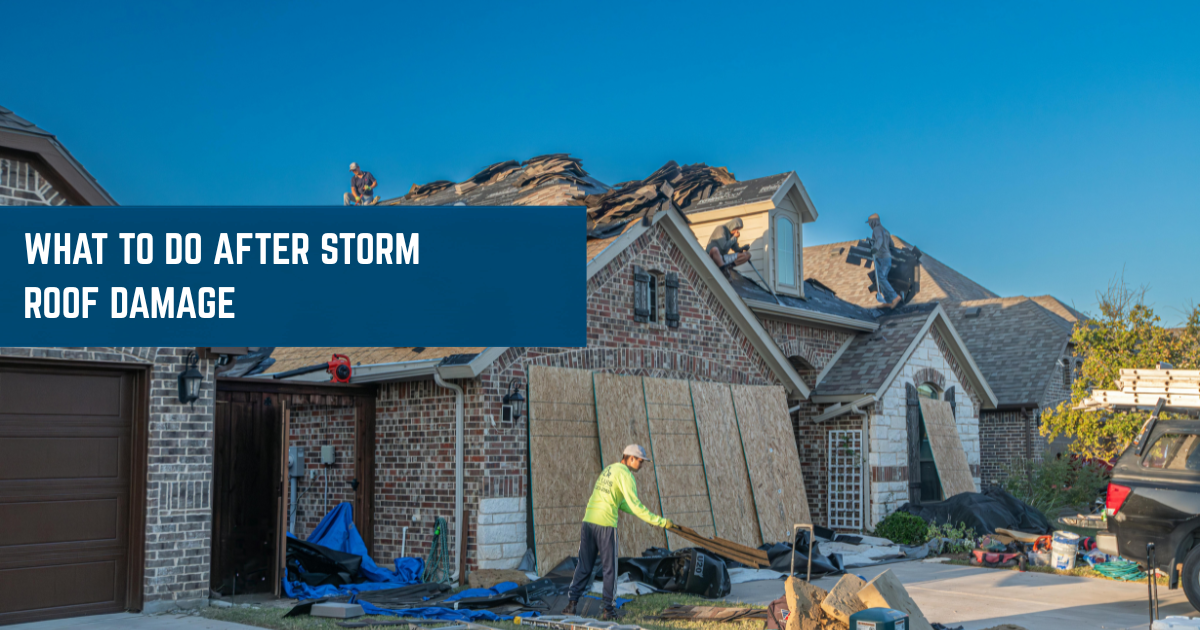
The wind has finally stopped blowing, and you are now looking at a roof that no longer looks right. Shingles are lying everywhere in the yard. The gutter is bent sideways. There might even be water stains on your ceiling. You’re facing roof storm damage right now. And here is the reality: the actions you will take over the next 24 to 48 hours are crucial. This can be the deciding factor that determines whether the process will be easy or long and complicated.
Panic will cause errors. Let’s calm down and go through the process step by step.
Step 1: Look for any safety risks first
Forget the roof for a minute. Walk the property and think safety first.
- Downed power lines? Stay 30 feet back and call your utility company.
- Smell gas? Get everyone outside and call the gas company from a distance.
- Sagging ceiling or cracked drywall? Stay out of that room – the structure may be compromised.
- Standing water near outlets? Turn off the breaker if it is accessible.
- Are there loose branches or other debris on the roof? Ensure children and animals are kept away until it is removed.
Don’t go up on the roof yourself. The storm-damaged roof will be slippery, unsafe, and full of weak areas that are impossible to notice from the ladder.
Step 2: Document the Roof Damage after the Storm
This is the step everybody rushes through, and it’s the one that bites people later. Adjusters want to see roof damage after storm season hits exactly as it happened – not after you’ve already cleaned up.
Grab your phone and get to work:
- Wide shots of the roof from every angle, taken from the ground
- Close-ups of missing shingles, dented vents, cracked flashing
- Photos of gutters, siding, even the dented fins on your AC unit
- Interior shots of ceiling stains or wet insulation
- A short video narrating what you’re seeing
Note the date, time, and rough storm details like hail size or wind speed. That timeline becomes gold if the roof storm damage is ever questioned later.
Step 3: Make Temporary Repairs, Not Permanent Ones
Your policy expects you to stop further damage – that’s not the same as fixing everything before the adjuster shows up. Stick to temporary measures:
- Tarp exposed holes or missing sections
- Set buckets under active leaks
- Board up broken windows
- Move furniture out of wet spots
- Run a fan or dehumidifier to slow mold growth
Keep every receipt. Tarps, plywood, even a short hotel stay – a lot of that gets reimbursed once your claim goes through.
Step 4: Call Your Insurance Company Right Away
Most policies give you a year or two to file, but don’t wait around. The more time has elapsed since the storm until the time of the phone call, the more difficult it will be to establish that the roof storm damage occurred when you claim it occurred.
Make sure to have the policy number, the date of the storm, and a brief description of the roof storm damage at hand when making the call. You’ll get a claim number back — write it down.
Step 5: Schedule a Professional Storm Damage Roof Repair Inspection
Adjusters see everything – fender benders, flooded basements, roofs. It’s just one item on a long list for them. A contractor who specializes in storm damage roof repair knows where damage likes to hide: under ridge caps, inside vent boots, behind flashing.
This is where a company like Intelligent Design Corp earns its reputation, offering honest roof storm damage repair estimates across the Twin Cities. Based in Maple Grove and serving the greater metro area since 2001, the team has spent decades guiding homeowners through the insurance process after storms hit. Since they are a GAF Master Elite roof contractor providing you with free in-home estimates, they take care of the inspection and communicate directly with the insurance company – one less thing to worry about!
Step 6: Be there during the Adjuster’s Inspection
Take a walk around your property with the adjuster. Point out what you found. Share your photos. If your contractor can be there too, even better – a second set of trained eyes rarely hurts your case.
You do not have to just accept the denial or the amount that is too low; you can make an appeal.
Mistakes Made by Homeowners That May Cost Them Money
The same patterns show up once a roof storm damage claim goes sideways:
- Waiting weeks or months to report the damage
- Making full repairs before the adjuster inspects the roof
- Hiring the first contractor who knocks on the door after a storm
- Signing a contract under pressure
- Not keeping receipts for temporary repairs
Skip these, and you’re already ahead of most homeowners facing a storm-damaged roof for the first time.
FAQs
Should I contact my insurance company or my roofer first in the event of roof damage?
Many homeowners contact their roofer first. A good contractor can tell you honestly whether the damage is even worth filing a claim over.
Will filing a claim for storm damage raise my premium?
Usually not for a single weather-related claim. Multiple claims in a short window can affect pricing.
How long do I have to file a storm damage roof repair claim?
Two years is often the time period allowed, although it is best if you act sooner.
What should I do if my insurance adjuster misses roof damage?
Alert them when you see it during the inspection. A detailed contractor report can strengthen your case.
Can I pick my own contractor for emergency roof repair after storm damage?
Yes. Insurance companies may suggest names, but the choice is always yours – local, licensed, and claims-experienced is a good bar to set.
Conclusion
Roof storm damage rattles people, and that’s completely normal. But the winners among homeowners do not rush but rather take the necessary steps, write it all down, a nd involve the proper people at the proper time. Forget about that ladder; make sure that you have all your documents in place and do not sign anything you did not read twice.
Now, if you are faced with a roof after a storm and do not know how to proceed, contact your local professionals from Intelligent Design Corp for a complimentary consultation. It is very often an essential step between success and failure.
Also read: Signs Your Home Has Storm Damage That You May Not See


