

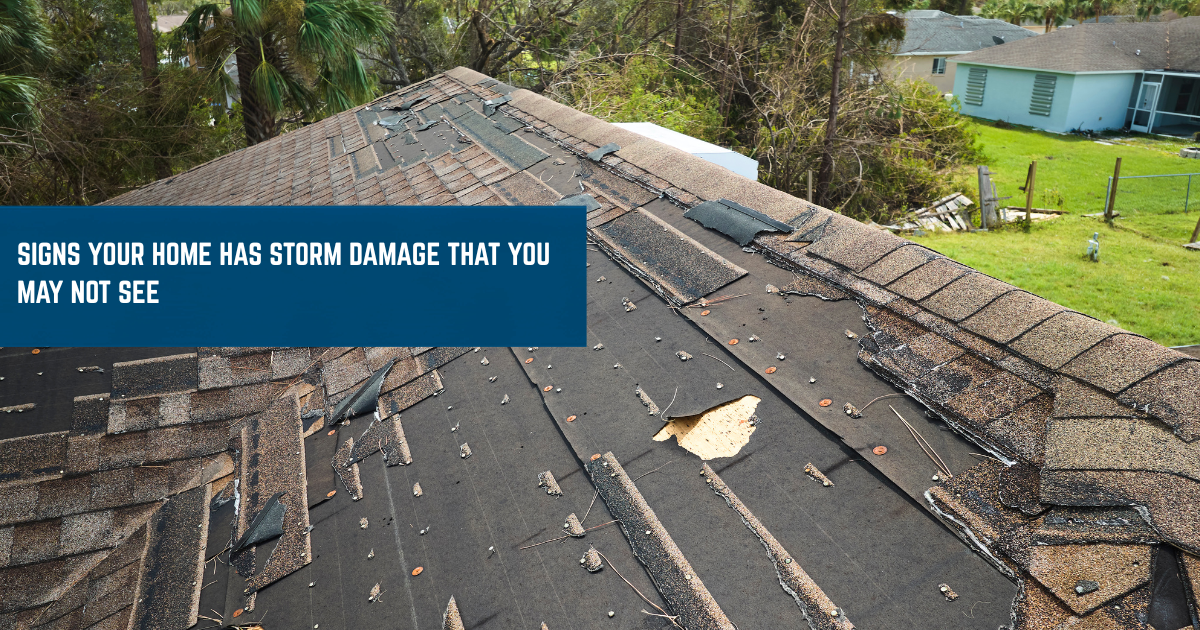
You did the walkaround. Checked the roofline from the driveway, dragged a few branches off the lawn, peeked in the gutters. Everything looked fine, so you moved on. Here’s the catch – most real signs of storm damage don’t show up where you’re looking. They show up weeks later, as a ceiling stain that wasn’t there before, or a light switch that buzzes when you flip it. By then, a cheap fix has turned into something expensive.
That gap between “the storm passed” and “the damage shows up” is where homeowners get burned. A quick walkaround catches the obvious stuff. It rarely catches what actually costs money.
Why Storm Damage Hides From the Untrained Eye
Roofs, siding, and foundations are built to take a beating. That doesn’t mean they’re immune to one. Wind and hail don’t need to tear a hole in your house to cause a problem – a bruised shingle or a hairline crack is often enough, and gravity plus the next few rainstorms do the rest.
That’s why inspectors keep bringing up hidden storm damage. This is no advertisement; this is just their pattern. What matters in terms of damage caused by storms is usually invisible from the ground.
Roof Damage: This Is Where You Should Start Looking (And It’s Not Visible).
Your roof takes the worst of every storm and rarely tells you right away. Roof problems are the cause of the majority of missed signs of storm damage, so be on the lookout for:
- Curled, cracked, or lifted shingles
- Bald spots where granules wore off, showing the darker mat underneath
- Soft, spongy spots in the attic (leave the roof itself to a pro)
- Small dents or bruises clustered on flashing or vents
Hail Damage Is Sneaky by Design
Hail doesn’t usually puncture holes. It simply bruises the shingle mat, pops off granules, and silently destroys the roof’s waterproofing ability. Your roof may look fine when viewed from the driveway but is nevertheless damaged. Adjusters and roofers check for this specifically, because homeowners rarely catch it themselves.
Wind Damage Signs That Hide in Plain Sight
Wind doesn’t always rip shingles off dramatically. More often, wind damage shows up as loosened fasteners, lifted seams, or shingles that shifted just enough to break their seal – enough to let water in during the next rain. Other wind damage signs worth checking:
- Siding panels that rattle or feel loose to the touch
- Gaps around window and door trim that weren’t there before
- A fence or gate that’s suddenly harder to close evenly
- Debris jammed into gutters, vents, or roof valleys
Water Stains and Ceiling Discoloration
A yellowish-brown ring on the ceiling, or a damp patch on an upstairs wall, is one of the few signs of storm damage you can catch without climbing anything. Don’t sit on it. The water has long ago found its way to the interior, having entered either the roof or the flashing area.
Musty Smells and Mold Growth
Mold doesn’t need much time. Give it 24 to 48 hours of trapped moisture, and it’ll grow somewhere you can’t see – inside a wall, under insulation, behind a baseboard. A new musty smell after a storm is worth taking seriously, even without a visible spot yet.
Foundation and Siding Cracks
Rain will alter the moisture content in your home’s soil, thus enlarging existing cracks or forming new ones. Walk around the outside and inspect for:
- New cracks in the foundation, larger than a hairline crack
- Siding that is cracked, bent, or separating from the wall
- Separations where siding meets a window, door, or corner trim.
Gutter and Downspout Trouble
Problems such as clogs or damage will direct the flow of water in the opposite direction that you desire, namely, down the fascia and behind the siding to the foundation. Make sure that after a rainstorm, the gutters are securely fastened and are directing water away from the foundation.
Blinks of Electricity and Unusual Noises
Flickering lights, a breaker that trips more than usual, a faint buzz near an outlet – these can point to moisture that’s reached your electrical system. Not everyone thinks about this being storm damage. To them, it might just be something else weird happening.
When You Need a Pro
A careful homeowner catches a lot while walking the property. A trained eye catches what that walkaround misses, and that’s why professional inspections matter for spotting signs of storm damage early. Intelligent Design Corp. exists to close that gap. Based in Maple Grove and serving the Twin Cities metro since 2001, their team has spent decades inspecting roofs and structures after Minnesota storms. As a GAF Master Elite contractor, they know precisely where hail damage and wind damage tend to hide, and their experience with insurance companies means you’re not left guessing through a claim.
Don’t Wait for the Damage to Introduce Itself
The homes with the biggest repair bills usually aren’t the ones hit hardest. They’re the ones where nobody caught the signs of storm damage early enough. A free, professional inspection costs nothing, and it tells you exactly where you stand – before a small problem turns into a five-figure one.
FAQs
How soon after a storm should I check for damage?
Within a day or two, if it’s safe outside. Signs of storm damage – loose shingles, small cracks – get worse fast once exposed to more wind or rain.
Can hail cause any harm to the roof without causing any holes?
Yes, this is how hail causes damage normally; it bruises the shingles, and this causes loss of the granules and not holes, hence escaping basic inspection.
Is a musty odor a sure sign of mold?
Not always, but check it out fast. A new musty smell after a storm is one of the more reliable early signs of storm damage, since mold can grow within a day or two of trapped moisture.
Will my insurance cover any storm damage repairs?
Typically, most policies will cover storm damage, but coverage will vary depending on your insurance company. A professional inspection report makes that claims conversation easier.
Will I require an inspection even though there is no visible damage to my roof?
Yes, especially after real wind or hail. Many signs of storm damage only show up up close, or from inside the attic, which is why a trained inspector beats a quick look from the driveway.
Conclusion
If a storm just rolled through your area, don’t let a glance from the driveway be the final word. Reach out to Intelligent Design Corp. for a free, in-home inspection, and let a team that’s done this for over twenty years walk your property the way a professional actually would – checking every corner a homeowner tends to miss.
Also read: What Are Common Problems With Metal Roofing


