

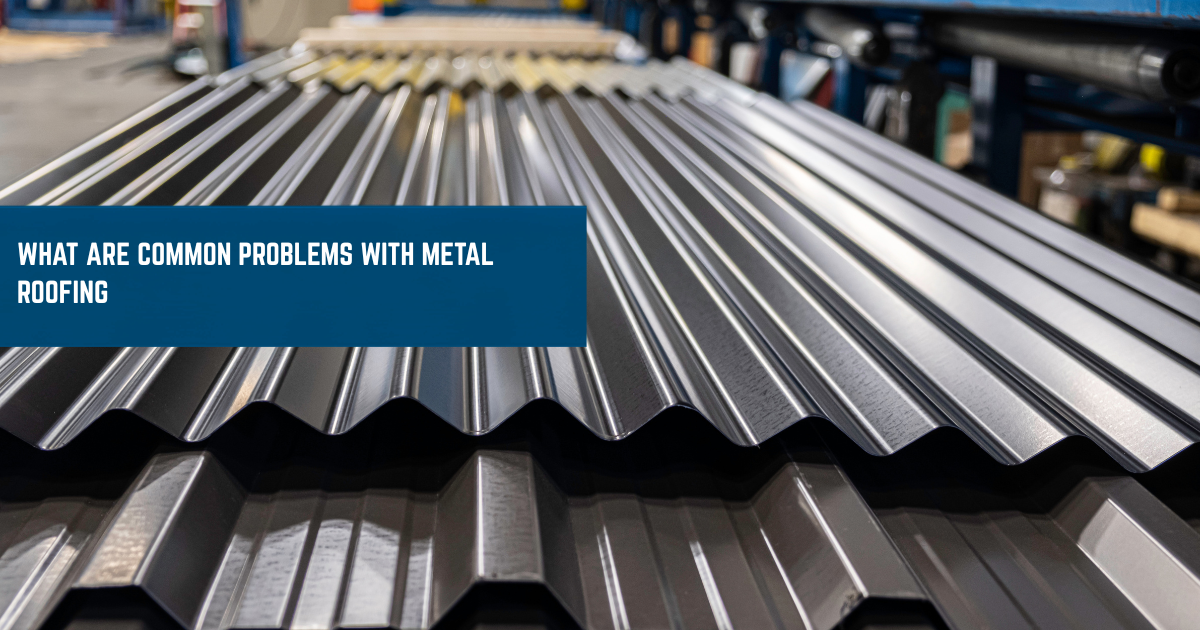
Thinking about a metal roof, or already have one and something feels off? The common problems with metal roofing are rarely dramatic – a metal roof doesn’t just fall apart overnight, but small issues stack up fast if nobody catches them early. Everyone thinks of “50 years of life” when they think of the material and concludes that it is indestructible. Not true at all, and learning what exactly causes the damage will help you protect yours from it faster than anything else.
The Quick Answer
There are only five main problems associated with metal roofs: noise, dents, expansion, fastener degradation, and corrosion where the metal interacts with other materials. Type “issues with metal roofs” into Google and you will find these five offenders over and over again. In most cases, it comes down to poor installation, poor material selection, or the complete absence of any maintenance program.
The Most Common Metal Roof Problems Homeowners Face.
This is what actually shows up in service calls, not what shows up in a sales brochure.
- Noise during rain and hail. Bare panels over open framing let sound through. Solid decking fixes it.
- Denting. Standing-seam steel resists dents well. Thinner steel or aluminum dents more easily.
- Oil canning. That wavy, rippled look isn’t really a defect – usually it’s thin-gauge metal or not enough room for expansion.
- Expansion and contraction stress. Metal moves with temperature swings. Panels without proper clips can buckle or crack sealant.
- Fastener and screw failure. Rubber washers on exposed screws dry out and crack after 10 to 15 years, letting water in.
- Corrosion. Mixing metals that shouldn’t touch – copper flashing on a steel roof, say – eats away at the weaker one.
- Higher upfront cost. Metal typically costs two to three times more than asphalt, though it pays off over the roof’s life.
- Color matching after repairs. Matching the original paint finish years later is tricky, since coatings weather unevenly.
None of this makes metal roofing a bad choice. It just means going in with your eyes open.
A Few Terms Worth Knowing
Oil canning is one of the most talked-about problems with metal roofs – that wavy, mirror-like distortion on flat panels. Galvanic corrosion is what happens when two metals touch and react, speeding up rust on the weaker one. Fastener failure is one of the most common metal roof problems inspectors flag on older installs.
Why These Metal Roofing Problems Happen in the First Place
Almost every issue traces back to a rushed installation, the wrong material for the climate, or zero maintenance after the crew leaves. Metal roofing doesn’t forgive shortcuts the way asphalt shingles do – a slightly off fastening pattern tends to show up as a leak within a season, whereas the same mistake on shingles might go unnoticed for years. That’s the through line behind every one of the common problems with metal roofing on this list.
Climate matters more than people expect, too. Coastal humidity speeds up corrosion, and big daily temperature swings stress seams and fasteners. Panel systems that work well in a moderate and dry environment will find problems soon after installation when placed in an environment with hard winters followed by hot summers – that is where the weaknesses of a metal roof will start showing themselves.
The True Weaknesses of Metal Roofing (Not from the Brochure)
All materials have their weak sides, and it’s better to know about the weaknesses of metal roofing to use it wisely.
- Foot traffic can dent or scratch panels, so equipment work needs a careful installer.
- Adding solar panels or skylights later means finding a roofer experienced with metal specifically.
- DIY repairs carry more risk – a poorly resealed screw hole can undo the point of switching.
- Not every roofer is equally skilled with metal. Experience matters more here than with asphalt.
None of these are reasons to skip metal roofing. They’re reasons to be picky about who installs it.
Preventing Common Issues Related to Metal Roofing
Most of the issues listed above can be easily avoided when the correct measures are taken.
• Purchase metal roofing with the right coating and gauge for your environment, rather than simply getting the most affordable one.
- Choose the right gauge and coating for your climate and hail risk, not just the cheapest option.
- Insist on solid decking and underlayment for less noise and a second layer of leak protection.
- Ask how your installer handles fastener spacing and thermal movement – a specific answer is a good sign.
- Have your roof inspected two times a year, particularly after any storm events occur.
- Use a contractor that specializes in metal roofs.
A lot of common metal roof problems are avoidable this way, and this is where the installer matters as much as the material. Intelligent Design Corporation, a Twin Cities–based contractor handling roofing, siding, and storm restoration since 2001, works with both asphalt and metal roofing as a GAF Master Elite contractor – the kind of specialization that catches fastener and flashing issues early. Those who work with metal roofs regularly know all the little things, such as fastener torque and expansion clips, that homeowners do not even know to ask about.
When to Hire a Pro
There are some clear indications that you should contact a professional right away: rust stains, increased energy bills, stains on the ceiling, or waves along the seams. Waiting rarely saves money – a $200 fastener repair now beats a $4,000 decking replacement after a leak goes unnoticed. Small metal roofing problems are cheap. Ignored ones aren’t.
FAQs
1. What’s the most common problem with metal roofing?
Fastener failure. The rubber washers become dry over time, in 10-15 years, and allow water to leak through.
2. Does metal roofing dent easily?
Depends on gauge and material. Thick steel is resistant to hail damage, while thin steel and aluminum get damaged more easily.
3. Is noise really one of the issues with metal roofs?
Mostly on roofs without solid decking or insulation underneath. If done correctly, a metal roof doesn’t make any extra noise.
4. How long before metal roofing problems show up?
Installation issues, like oil canning or fastener leaks, often surface within the first few years. Corrosion happens later in life, usually after ten years.
5. Is the disadvantage of metal roofing a good tradeoff?
Yes, for most homeowners; although it is costly, a metal roof can last longer than two or three asphalt re-roofs.
Conclusion
Metal roofing lives up to its reputation for longevity; however, this does not make it an “install-and-forget” building material. Typical issues with metal roofs – including sound problems, dents, worn-out fasteners, thermal expansion, and even corrosion in some cases – usually can be directly attributed to poor installation or lack of regular inspections. Choose the correct size of metal, get a contractor who knows about metal roofs, and do two inspections every year. If you follow these recommendations, you will not have to worry about your roof for many years to come.
If you’re ready for an inspection or a second opinion on an estimate, an experienced installer can walk you through your options and make sure the job gets done right the first time – good workmanship now keeps you off this list later.


