

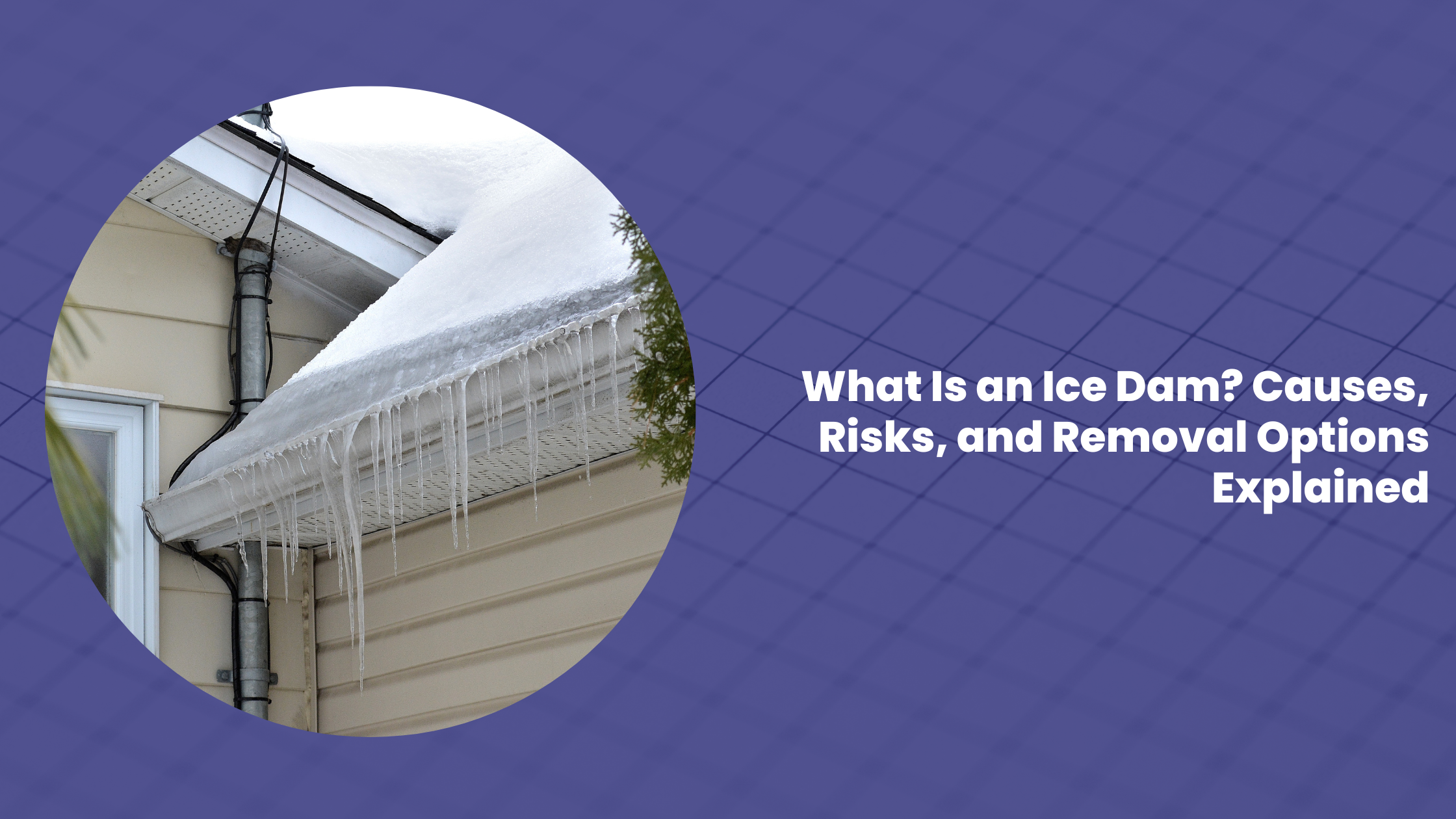
You emerge after a winter storm to find that massive ice ridge forming on your gutters, with icicles hanging from your eaves that are as big as baseball bats. It looks kind of pretty. Then three days later, water starts seeping through your ceiling, and it’s not so charming anymore. That ridge of ice has a name – an ice dam – and it’s one of the most common, most misunderstood winter roofing problems homeowners in cold climates deal with every year.
An ice dam isn’t bad luck, and it’s not really about how much snow fell. This is concerning for your house. After knowing about the issue on your roof, there will be no more secrets to solve.
What Is an Ice Dam?
An ice dam is a ridge of solid ice that builds up along the edge of your roof, usually right above the gutters. It’s all about your home. When you figure out what is going on atop your roof, it goes from being an enigma to something you can solve.
What Causes Ice Dams?
If you have searched “what causes ice dams” on Google at 11 p.m., trying to figure out why your ceiling is wet, the answer is simply heat. Not sunshine, not outdoor air – heat leaking out of your own home.
The cycle, step by step:
- Warm air rises from your living space, heating the roof deck from underneath even while it’s freezing outside.
- Snow on that warmer part of the roof melts and runs toward the eaves, which stay cold since they overhang past the heated part of the house.
- Water will refreeze at this cold point, making the ice dam thicker with each iteration
The major reasons for ice dams are the same in almost all cases. These include low insulation in attics, bad attic ventilation, and lack of insulation around recessed light fixtures and attic access panels, and vents leading from an exhaust fan to the attic.
The Real Cost of Ice Dam Damage
The ice itself isn’t really the problem. It’s what happens once water backs up behind it.
Ice dam damage tends to show up in places you wouldn’t expect from a roofing issue:
- Water spots forming on ceilings and walls
- Moist, compressed attic insulation becoming ineffective
- Growth of mold and mildew in wall cavities
- Paint peeling off or blistering drywall near exterior walls
- Warping of wooden floors due to moisture seeping through the structure
Without intervention, ice dam damage on the roof includes lifting and splitting of the shingles, loosened fasteners, and possible rotting of the decking. An eyesore in January could become a five-figure fix come spring.
Indications of an Ice Dam Before It Gets Worse
Every icicle is not necessarily an indicator, but a few are:
- Growing icicles that do not melt away
- A visible ridge of ice, not a smooth sheet, along the eaves
- Water stains near exterior walls, or ice forming inside the attic
- Gutters that stay frozen solid for days at a time
Ice Dam Removal Options
Once a dam has formed, you’re choosing between a short-term fix and a permanent one.
For quick relief: a roof rake pulls fresh snow off the lower roof from the ground, cutting off fuel for new ice. Calcium chloride ice melt – never rock salt, which damages shingles and metal – can go sparingly in an old stocking laid across the dam to open a drainage channel.
Do not use an axe or shovel to chip at the ice. Do not get on top of an icy roof because you could fall off the roof and have to go to the hospital.
The professional route: licensed crews use low-pressure steam to melt an ice dam layer by layer without harming the shingles. A two-person team, one on the roof, one spotting below, clears the ice far faster and safer than doing it alone.
Preventing Ice Dams for Good
Removal buys you time. Prevention actually solves the problem, and it comes down to controlling attic heat:
- Add more attic insulation to match what’s recommended for your area
- Seal any air leaks that exist in the hatchway, recessed lighting, and ventilation ducts
- Provide equal ridge and soffit ventilation so that cold air blows the warm air out
- Route exhaust fans straight outside, never into the attic
- Clean gutters of leaves and other materials before the first frost
Thermal imaging is one of the quickest ways to determine areas of heat loss, as they may not be readily apparent from within the home.
FAQs
Can I remove an ice dam myself?
While a roof rake is safe to remove snow from the ground, walking up on a frozen roof or breaking ice is dangerous and should be left to a professional.
Do ice dams always cause leaks?
Not necessarily, but they create the circumstances for one – the longer the ice dam stays where it is, the more water accumulates behind it, increasing the chance that it will find a hole in the roof.
Is homeowners insurance good for ice dams?
Few insurance policies cover removal of the ice, but most cover the resulting damage from the water. Not all coverage is equal, so check your insurance policy.
How soon after a heavy snowfall will an ice dam appear?
Based on the degree of snowfall and heat loss from the attic, formation of the dam may take place within a day or two following a heavy snowfall.
How can ice dams be avoided in the long run?
Attic insulation and proper attic ventilation play the biggest roles. After these measures, the attic remains cool, and snow melts evenly or does not melt at all.
Conclusion
Minnesota winters are long, and the freeze-thaw cycle behind ice dam formation can repeat dozens of times between November and March – exactly the climate where a local, experienced contractor earns their reputation.
“Intelligent Design Corp, a general contractor for Ice Dam Removal Services located in the Twin Cities region, working in Maple Grove and other nearby metro areas since 2001, does it the correct way when it comes to ice dam removal – two-man teams, steam removal that preserves the shingles, and the use of thermal imaging to find out where heat is escaping and causing the problem. Being a GAF Master Elite roofing contractor, the company also assists homeowners when it comes to the insurance claim for the water damage incurred.”
“If there is an ice buildup on your roof this winter, do not wait for it to become a ceiling leak. An inspection will cost you a lot less than water damage repair.”
Also read: Planning a Bathroom Remodel? Find the Right Bathroom Remodeling Services in Maple Grove, MN


