

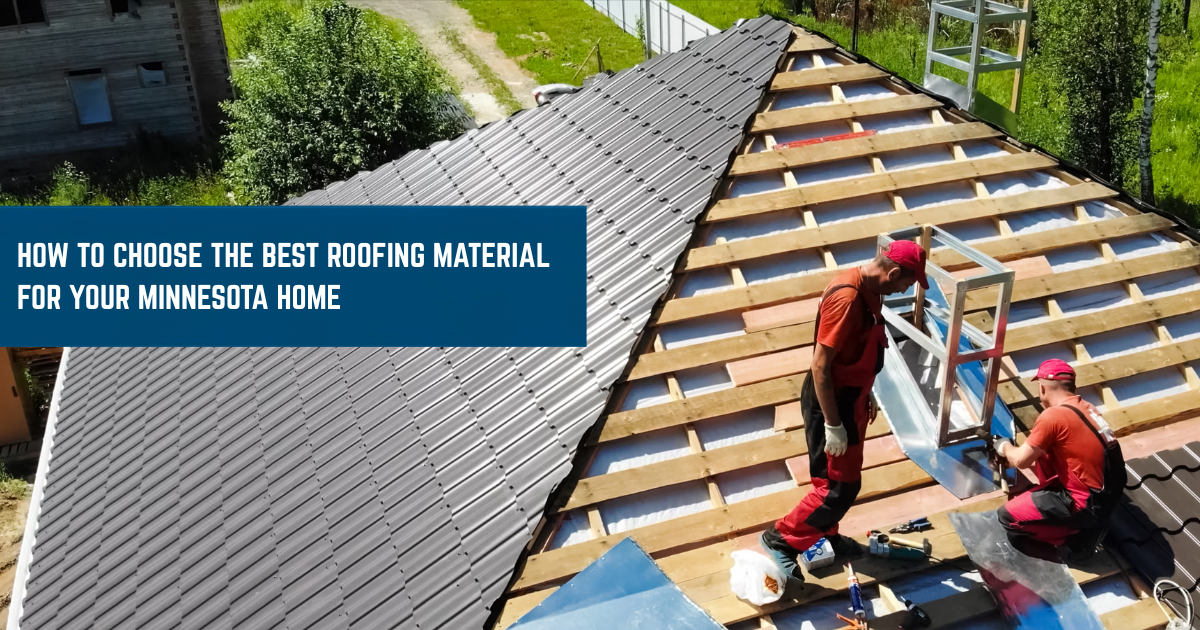
Most Minnesota roofs don’t wear out. They get beaten out.
Between June hail and February ice dams, a roofing material that performs beautifully in Missouri can turn into a twelve-year mistake in Maple Grove. In State Farm’s 2022 claim data, Minnesota was ranked first in the nation for hail losses, totaling around $799 million, surpassing even Texas. But now comes winter, when the same roof must deal with the additional stress of snow loading, ice dams, and 40-degree temperature fluctuations.
See below: how each material holds up in the real world, the cost of that material compared to its competitors, and the problems inspectors find every year in the Twin Cities.
What Minnesota’s Climate Demands From a Roofing Material
The best roofing material for a Minnesota home does three things, resists impact, sheds meltwater at the eaves, and stays flexible below zero. Color and curb appeal matter. They just don’t decide whether your roof reaches year twenty-five.
The four stresses that decide how long your roof lasts
- Hail. Severe season runs April through September. A hail bruise on asphalt often doesn’t show granule loss for months.
- Freeze-thaw cycling. Expansion and contraction loosen fasteners, open seams, and crack brittle materials.
- Ice dams. Meltwater refreezes at the cold eave, backs up under the covering, and finds the deck.
- Wind. Straight-line events regularly exceed the ratings of builder-grade three-tab shingles.
Why what’s under the roof matters as much as what’s on it
This is the part most homeowners skip, and it’s where the money quietly goes.
Minnesota’s residential code requires an ice barrier, two cemented layers of underlayment or a self-adhering polymer-modified bitumen sheet, running from the lowest roof edge to at least 24 inches inside the exterior wall line. That membrane is your protection against ice dam backup. No shingle, at any price, replaces it. Code also calls for one square foot of net free vent area per 150 square feet of attic, balanced between soffit intake and ridge exhaust.
One misconception worth correcting: the Minnesota Department of Commerce is clear that ice dams are caused mainly by warm, moist air leaking into the attic around plumbing stacks, can lights, and flues. More roof vents won’t eliminate them and can worsen moisture problems. If you get ice dams every winter, the fix is air sealing, not a different shingle.
Comparing Roofing Materials for Homes in the Twin Cities
Architectural asphalt shingles
Most Minnesota homes wear asphalt, and for good reason. Laminated architectural shingles handle freeze-thaw well, cost the least to install, and, this matters here, they’re straightforward to repair after a storm
Most major Minnesota carriers discount premiums for Class 4 roofs, but it isn’t automatic; your agent will want signed certification and product documentation.
Metal roofing
Standing seam and metal shingles last 40 to 70 years, shed snow well, and shrug off wind. On a steeper pitch, snow slides instead of sitting, a real advantage here.
The trade-offs are honest ones. Installed cost typically runs two to three times asphalt, large hail can dent some panel profiles cosmetically, and metal demands an experienced installer. The failure point is almost always flashing and fastener detail, not the panel.
Cedar, slate, and synthetic alternatives
Cedar shakes look amazing on a lakeside home but require plenty of maintenance to last for 25 years. Slate is long-lasting but heavy enough to make it impossible to be supported by regular framing. Synthetic slate splits the difference, the look at a fraction of the weight, with a shorter track record.
How to Choose Roofing Materials without Regretting It
Five questions worth answering before you sign
- How long are you staying? Under seven years, a quality architectural shingle is usually the sound financial call.
- What’s your hail exposure? If your ZIP took a two-inch event recently, Class 4 deserves thought.
- What does your carrier discount? Ask for the Class 4 credit as a line item.
- How complex is your roof? Valleys, dormers, and low slopes narrow your options.
- Is your attic sealed and insulated? Fix that first; it affects every material equally.
Common mistakes we see on Minnesota roofs
The expensive ones repeat: skipping the ice barrier past the wall line, reusing old flashing, layering over existing shingles to save on tear-off, and picking a storm-chasing contractor by price alone, often one with out-of-state plates and no Minnesota license.
FAQs
What is the optimal roofing material for a Minnesota house?
In general, the most optimal material will be the architectural asphalt shingle with impact rating 4.
Does a metal roof eliminate ice dams?
No. Metal sheds snow more readily, which lowers the odds, but ice dams come from attic heat loss. Air sealing and insulation are the actual fix.
Are Class 4 shingles worth it in Minnesota?
Usually yes. Given our hail frequency, the upgrade plus a possible insurance discount often pays for itself before the roof’s midpoint.
Can a roof be installed in winter?
Yes, with care. Asphalt shingles need warmth to seal, so a good crew hand-seals in cold weather. Emergency work shouldn’t wait for spring.
Conclusion
Choosing roofing materials comes down to matching the material to your climate, your timeline, and your budget, in that order. The shingle you pick matters. What sits beneath it, and who installs it, matters more.
Intelligent Design Corporation has cared for homes in Maple Grove and across the Twin Cities metro since 2001. As a GAF Master Elite roofing contractor, we have a license in the state of Minnesota #BC629147, and we work with every major insurance company. This means that if your roof was damaged by hail, we will go through the process with you instead of just providing the paperwork.
Schedule your free estimate: 763-315-0745 or schedule yours online. If your roof is intact, we will let you know that as well.
Also read: Should You Replace Your Roof and Siding at the Same Time? Pros, Costs & Savings


