

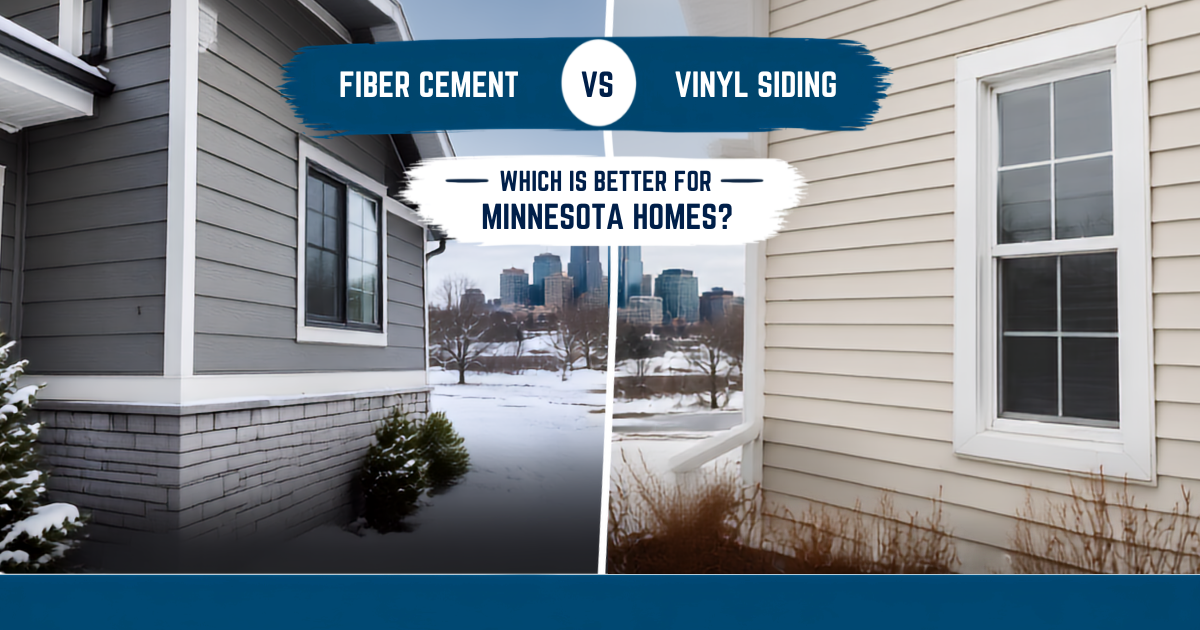
When you look out at the Minnesota winters and go to work on a house, you realize that not all materials are suitable. Deep freezes. Sticky August humidity. Hail that lands the week you scraped together remodel money. Picking siding here isn’t a style call. It’s a durability call, and the weather grades your homework.
Homeowners across the metro land in the same spot, especially anyone pricing out vinyl siding installation in Maple Grove: Fiber Cement vs Vinyl Siding? Both have die-hard fans. Both are on your street. Both get sold as the obvious answer by someone with a business card.
So here’s an honest siding comparison durability, cost, upkeep, energy efficiency to help you sort out what the best siding for Minnesota weather is for your house.
Understanding the Basics of Each Siding Material
Before the siding comparison means anything, know what you’re buying. Fiber cement, usually sold as James Hardie siding, is cement, sand, and cellulose fiber pressed into planks. It reads like wood from the curb without wood’s baggage no rot, no bugs, no swelling every spring.
Vinyl is PVC. Plastic, basically. Default choice for decades, and for good reason light, cheap, more colors than anyone needs.
Differences at a Glance
- Fiber cement is heavier and stiffer, so it takes a hit without denting or warping a common shortlist pick for best siding for Minnesota storm country.
- The reason why Vinyl siding installations in Maple Grove wrap up faster is because vinyl is light and flexible.
- Vinyl, basically does not need a paintjob every 10 to 15 years.
- Vinyl costs less going in. Fiber cement lasts longer. That’s the siding comparison in one line.
Why Climate Matters More Than Most People Think
Siding that’s flawless in Phoenix falls apart here. Freeze-thaw cycles, ice dams, a 40-degree swing in a day all of it pulls at your walls. Anything that expands too much, or turns brittle in the cold, ages faster in Minneapolis than it would down south. It’s also why energy-efficient siding isn’t a luxury upgrade in this state. It’s a heating bill you either pay or you don’t.
Performance in Minnesota’s Harsh Weather
Here’s the part everybody actually wants.
How Each Material Handles Cold, Snow, and Wind
- Fiber cement doesn’t crack or warp in extreme cold. The density does the work.
- Vinyl gets brittle below zero. A wind-thrown branch or a snow shovel swung by a tired guy at 6 a.m. splits it.
- Hail and high wind? James Hardie siding and other fiber cement takes that round which matters, given our summers.
- Vinyl is rated for serious wind too, but thin or aging panels peel off in a bad gust.
Run that half of the siding comparison honestly and fiber cement wins on weather. It doesn’t win everything, though the vinyl siding benefits show up elsewhere.
Mistakes Homeowners Make When Choosing Siding
The big one: assuming cheapest today means smartest overall. Vinyl saves real money at install. But a cold snap that splits three panels, or five summers of uneven fading, claws it back. The other mistake is forgetting maintenance exists. Fiber cement wants paint eventually it also shrugs off moisture and rot, so fewer of the repairs nobody budgets for. Considering the best siding for Minnesota homes is about looking beyond first impressions to the twelfth year.
Cost, Maintenance, and Value
Let’s talk money.
What you’ll actually pay Over Time
Vinyl installs cheaper that’s why most quotes for vinyl siding installation in Maple Grove come in under the fiber cement bid. Lighter material, faster labor. Fiber cement costs more because it’s heavy and needs crews who know it.
Then the math shifts. Spread cost across those years and the gap closes, sometimes flips. A siding comparison that stops at the invoice tells half the story energy-efficient siding keeps paying you back every January.
Energy Efficiency and Insulation Benefits
Energy efficient siding is a must for the type of climate we have here in Minnesota, being almost half a year of heating season. Fiber cement insulates decently alone, and an insulated backer board makes a noticeable difference in a drafty house. Insulated vinyl panels trap air against the wall and slow heat loss the most underrated of the vinyl siding benefits, and one reason vinyl still competes for best siding for Minnesota winters.
Both can be real energy-efficient siding. Both can also be mediocre if the crew rushes the wrap and flashing. Material matters; installation matters more.
FAQs
Is fiber cement siding worth the cost in Minnesota?
For most homeowners, the investment is worth considering the durability it provides for decades to come against cracking, wrapping and moisture.
Does vinyl siding crack in cold Minnesota winters?
It can, especially older or budget-grade panels. Cold makes vinyl brittle, so an impact fiber cement would ignore leaves a split. Newer insulated lines are more resistant and you get similar vinyl siding benefits as long as you get good materials installed properly.
Which siding option offers better energy efficiency?
Both compete well. Insulated vinyl siding benefits from trapped air; fiber cement benefits from an insulated backer. Either counts as energy-efficient siding when it’s done right.
Can I install vinyl siding myself to save money?
People try. Bad installs are a top cause of early siding failure, so vinyl siding installation in Maple Grove is a job where hiring out pays for itself.
Conclusion
This siding comparison comes down to priorities. Lower upfront cost and a quicker job? Vinyl siding benefits homeowners on a budget, and it holds up fine installed properly. Maximum durability, least fuss over 40 years? Fiber cement James Hardie siding especially is the better bet, and a strong candidate for best siding for Minnesota conditions.
Either way, the material only performs as well as the crew behind it.
If you’re comparing quotes for vinyl siding installation in Maple Grove, or want a straight answer on whether fiber cement fits your house better, Intelligent Design Corporation will walk you through it. Reach out to schedule a consultation and get a recommendation built around your home, your budget, and the weather we actually get.


